You created a lead magnet, promoted it, and waited for the subscribers to arrive.
But the numbers barely moved.
In many cases, the lead magnet itself is not completely broken. It is simply misaligned. The topic may be too broad, the promise too vague, the title too weak, or the signup experience too difficult.
These small problems can quietly reduce conversions even when the resource looks professional and contains useful information.
In this guide, we will break down seven common lead magnet mistakes, explain why they hurt performance, and show you how to fix each one without rebuilding your entire campaign from scratch.
Key Takeaways
- An underperforming lead magnet does not always need to be replaced. Start by identifying where the campaign is breaking down.
- A strong lead magnet speaks to one clear audience and helps solve one specific, meaningful problem.
- The best format depends on the result the subscriber needs, not on whether the resource is short or long.
- A clear title and promise help visitors understand the value before they decide whether to subscribe.
- Design should make the content easier to understand and use, but it cannot compensate for a weak offer.
- Ask only for the information you genuinely need, then test the complete signup and delivery experience.
- The lead magnet should lead naturally into useful follow-up and a relevant next step.
- Review performance beyond downloads by tracking conversions, engagement, next-step actions, and lead quality.
- Focused improvements are often easier to measure and more effective than rebuilding the entire campaign.
Affiliate Disclosure: Some of the links on this site are affiliate links. That means if you click and make a purchase, I may earn a small commission at no extra cost to you.

Why Lead Magnets Fail
Most underperforming lead magnets have a problem with relevance, value, visibility, or the experience surrounding the offer.
Many creators focus first on the format a checklist, eBook, template, or guide when the bigger issue is alignment. If the topic does not address a specific and immediate need, strong design and heavy promotion will only do so much.
People rarely download a resource because it contains the most information. They download it because they believe it will help them solve a problem, make a decision, or achieve a useful result.
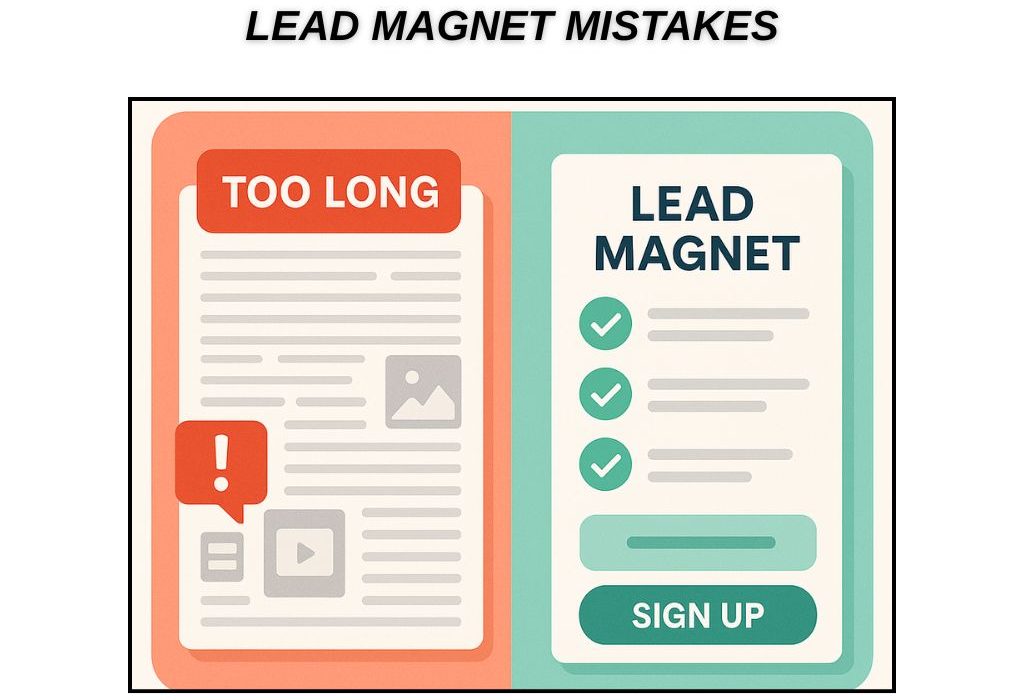
Another common issue is unnecessary complexity. A lead magnet that tries to teach everything can feel like work instead of help. A longer resource can still perform well when the topic requires depth, but every section should support the promised outcome.
The experience around the lead magnet matters too. A strong resource can still underperform when:
- The title is unclear
- The landing page does not communicate the value
- The signup form asks for unnecessary information
- The delivery email arrives late or not at all
- The download is difficult to access on mobile
- The offer is not promoted to the right audience
After creating more than 80 lead magnets, I have found that the topic and promise usually deserve attention before the design. A polished resource cannot compensate for an offer people do not immediately understand or want.
When a lead magnet is not performing, the answer is not always to start over. Often, a clearer audience, stronger promise, simpler experience, or better follow-up can make the existing offer far more effective.
7 Common Lead Magnet Mistakes and How to Fix Them
A lead magnet can contain valuable information and still underperform.
The problem is often not the entire resource. It is one weak point in the audience, promise, presentation, delivery, or follow-up. Here are seven common mistakes to look for before you decide to replace the offer completely.
Targeting Everyone Instead of One Clear Audience
When a lead magnet tries to appeal to everyone, the promise usually becomes too broad to feel relevant.
Phrases such as “Grow your business,” “Get more clients,” or “Improve your productivity” may describe desirable outcomes, but they do not tell the reader who the resource is for or how it will help.
The second title speaks to a defined audience, situation, and goal.
Choose one primary audience for the lead magnet. Define their current problem, level of experience, and desired result. You do not need to exclude everyone else permanently. You simply need the offer to feel specific enough that the right reader immediately recognizes its relevance.
Trying to Deliver Too Much
Many creators assume that a longer lead magnet automatically provides more value.
It can, but only when the topic genuinely requires depth. The real problem is unnecessary information that makes the resource harder to understand or complete.
A 20-page guide may be appropriate for a detailed process. A one-page checklist may be better when the reader needs a quick reminder or sequence of actions.
Decide what the subscriber should be able to understand, decide, create, or complete after using the resource. Then remove anything that does not contribute to that result. A focused lead magnet often feels more useful because the reader can see exactly how to apply it.
Using a Weak or Generic Title
The title is often the first and sometimes only part of the offer a potential subscriber reads.
Titles such as “Free Guide,” “Business Checklist,” or “Marketing Template” describe the format without communicating the value.
A stronger title helps the reader understand:
- Who the resource is for
- What problem it addresses
- What result it helps produce
- What format or method it uses
Lead with the outcome or useful result, then add the format when it improves clarity. A strong title does not need exaggerated language. It needs a clear reason to care.
Spending More Time on Design Than the Offer
Professional design can improve readability, credibility, and perceived value.
But attractive colors and polished layouts cannot compensate for weak content or an unclear promise.
Review the substance before formatting the final asset. Does the resource solve the promised problem? Is the advice practical? Is the structure easy to follow? Then use design to support the content through clear headings, readable typography, comfortable spacing, and relevant visuals.
Making Signup or Delivery Too Complicated
Every unnecessary step gives someone another reason to leave.
Common problems include:
- Long forms requesting unnecessary information
- Multiple redirects
- Confusing confirmation steps
- Delayed delivery emails
- Broken download links
Test the complete experience yourself. Submit the form, confirm the email arrives, open the lead magnet, test every link, and review the mobile experience. A smooth delivery process helps the subscriber feel confident they made the right decision.
Forgetting What Happens After the Download
A lead magnet should begin the relationship, not end it.
If subscribers receive the resource and never hear from you again, they may forget why they joined or fail to understand how your business can help them next.
Create a short follow-up sequence that helps the subscriber use the resource and move toward the next logical step. Confirm delivery, highlight an important section, share a tip, and invite the subscriber to explore related content or services. The goal is to continue the value promised at signup.
Never Reviewing or Testing the Offer
A lead magnet can lose relevance as your audience, products, positioning, or market changes.
Even an evergreen resource may eventually contain outdated examples, broken links, old branding, or a call to action that no longer fits your business.
Test the complete experience and track what happens after the signup. Look beyond the number of downloads to understand if the offer is attracting the right people. Use the data to improve the title, promise, format, CTA, or follow-up sequence. Small improvements can strengthen an existing lead magnet without requiring you to start over.
A lead magnet does not succeed simply because people download it.
It succeeds when the topic, promise, experience, and follow-up work together to create a relationship that makes sense.
How to Turn These Fixes Into Lasting Growth
Fixing one weak point can improve a lead magnet. Building a habit of reviewing the full campaign helps those improvements last.
Treat your lead magnet as an active part of your marketing rather than a file you publish once and forget.
- If few people visit the page, review your promotion and traffic sources.
- If visitors do not subscribe, examine the audience, title, promise, landing-page copy, and form.
- If subscribers do not access the resource, check the delivery email, links, and mobile experience.
- If they use the lead magnet but take no further action, review the call to action and follow-up sequence.
- If the leads are not a good fit, revisit the topic, positioning, and audience targeting.
This makes it easier to solve the right problem instead of changing the entire campaign at once.
Track the lead magnet’s conversion rate, engagement, next-step actions, and lead quality. Pay attention to repeated questions, points of confusion, and feedback from subscribers.
That might mean:
- Clarifying the title
- Narrowing the audience
- Removing unnecessary content
- Simplifying the signup form
- Updating examples
- Strengthening the delivery email
- Revising the next-step offer
Small changes are easier to measure and often more useful than constantly replacing one lead magnet with another.
The goal is not to keep adjusting the campaign for the sake of activity. It is to keep the offer relevant, easy to access, and connected to what your audience needs next.
A lead magnet becomes more valuable over time when you continue learning from the people who use it.

Conclusion
An underperforming lead magnet does not always need to be replaced.
Often, the problem is more specific: the audience is too broad, the promise is unclear, the resource tries to do too much, or the experience becomes difficult after the signup.
Start by identifying where the campaign breaks down. Then fix the weakest point before changing everything else.
Serve one clear audience. Solve one meaningful problem. Make the value easy to understand, the resource easy to access, and the next step easy to follow.
After creating more than 80 lead magnets, I have learned that strong results rarely come from adding more complexity. They usually come from making the offer more relevant, useful, and easier to act on.
Keep reviewing what people respond to, make focused improvements, and let real performance guide what you change next.
Frequently Asked Questions
How often should I update my lead magnet?
Review it whenever the information, offer, audience, or performance changes. Evergreen resources may only need a scheduled check once or twice a year, while tool guides, reports, and trend-based content may require more frequent updates.
What is the best lead magnet format?
The best format is the one that helps the audience achieve a clear result with the least unnecessary effort.
A checklist may work well for a repeatable process. A template can help someone create something faster. A guide may be better when the topic requires more explanation. Choose the format based on the problem, not on what is currently popular.
Do lead magnets still work?
Yes, when they offer useful value to a clearly defined audience and are supported by an effective signup and follow-up experience.
A lead magnet is less likely to perform when the topic is too broad, the promise is unclear, or the resource feels disconnected from what the audience needs next.
How can I measure whether my lead magnet is working?
Start with the landing-page conversion rate, then look at what happens after the signup.
Track whether subscribers:
- Receive and access the resource
- Open and click follow-up emails
- Take the intended next step
- Remain engaged over time
- Match the type of lead your business wants
Downloads alone do not reveal whether the lead magnet is attracting the right people or supporting future conversions.
Should I replace an underperforming lead magnet or improve it?
Improve it before replacing it completely.
Start by checking the audience, title, promise, landing page, form, delivery, and follow-up. A focused change may improve performance without requiring a new resource.
Replace the lead magnet when the topic is no longer relevant, the audience has changed, or the offer no longer supports your business goals.
Why are people visiting my landing page but not subscribing?
The offer may not feel relevant, clear, or valuable enough.
Review the title, promise, audience, landing-page copy, form length, design, and trust signals. Make sure visitors can quickly understand what they will receive and why it is worth exchanging their contact information.
Why do subscribers download my lead magnet but take no further action?
The resource may not connect naturally to the next step.
Review the call to action and follow-up sequence. The next offer should build on the problem the lead magnet already helped solve rather than introducing an unrelated sales pitch.