Create Lead Magnets People Want to Download
Learn how to plan, create, launch, and improve lead magnets with practical guides, real examples, and carefully selected tools.
Whether you are growing a business, an online store, a blog, or a personal brand, you will find clear guidance for turning your ideas into resources that attract the right subscribers.
Affiliate Disclosure: Some of the links on this site are affiliate links. That means if you click and make a purchase, I may earn a small commission at no extra cost to you.
Find the Right Lead Magnet for Your Business
Different audiences respond to different kinds of resources. The best place to start is with a problem your visitors already want help solving.
Service Businesses
Turn website visitors into potential clients with resources that prepare them to take the next step.
Useful formats may include:- Planning worksheets
- Readiness checklists
- Self-assessments
- Project preparation guides
- Cost or timeline estimators
A website designer might offer a homepage planning worksheet, while a consultant could create an assessment that helps prospects identify where they need support.
Online Stores
Use lead magnets to help shoppers choose, use, or care for the products you sell.
Strong options include:- Buying guides
- Product comparison sheets
- Recommendation quizzes
- Care instructions
- Size or fit guides
- Seasonal checklists
The resource should make shopping easier while giving subscribers a relevant reason to stay connected with the brand.
Bloggers and Publishers
Turn existing articles and research into practical resources readers can save and use.
You might create:- Checklists
- Cheat sheets
- Templates
- Reading lists
- Printable summaries
- Companion worksheets
A detailed article can introduce the idea, while the lead magnet helps the reader apply it without returning to the full post every time.
Coaches and Content Creators
Package your expertise into a resource that gives your audience a clear starting point.
Possible formats include:- Workbooks
- Short challenges
- Swipe files
- Reflection prompts
- Planning templates
- Mini-guides
The lead magnet should give people a genuine result while introducing the way you think, teach, or solve problems.
The right format depends on what your audience needs to understand, decide, or complete. Start there, then choose the resource that makes that progress easier.
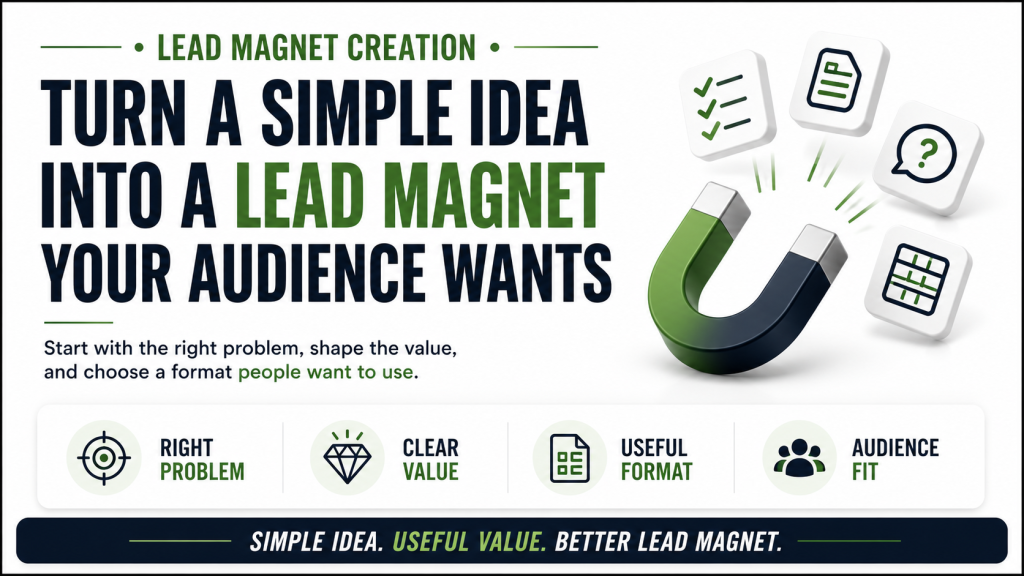
What You’ll Find Inside the Lead Magnet Hub
This site is designed to help you make better decisions at every stage of the lead magnet process from choosing the right idea to launching the finished resource.
Step-by-Step Creation Guides
Learn how to choose a format, shape the promise, organize the content, and turn an idea into a lead magnet your audience can actually use.
Real Examples and Breakdowns
See how businesses and creators structure their lead magnets, what makes each offer appealing, and which ideas you can adapt for your own audience.
Tool Reviews and Comparisons
Explore generators, builders, design platforms, and delivery tools with clear explanations of their strengths, limitations, and best use cases.
Strategy for Growing the Right Audience
Learn how to connect your lead magnet to your business, attract more relevant subscribers, and create a follow-up experience that keeps the relationship moving forward.
The goal is not to give you more generic advice. It is to help you understand what to create, why it matters, and how to make it work for your audience.

Why Some Opt-In Pages Convert Better Than Others
An opt-in page can underperform even when the lead magnet itself is valuable. The offer still needs to match what the visitor wants, and the page must communicate that value clearly.
Traffic quality, visitor intent, trust, page speed, mobile usability, and form design can also affect the result.
Published benchmarks provide context, but they should not be treated as universal targets.
Unbounce reported a median landing-page conversion rate of 6.6% after analyzing 41,000 pages, 464 million visitors, and 57 million conversions in Q4 2024. Those conversions included different actions, such as purchases, downloads, and signups.
GetResponse reported an average landing-page subscription rate of 10.76% in its 2023 customer data. Results varied widely by industry, ranging from 0.7% in retail to 39.93% in restaurants and food.
These figures show why broad comparisons require caution. A good result depends on the industry, offer, traffic source, audience awareness, and commitment required.
Common Weaknesses and Stronger Choices
| Element | Common Weakness | Stronger Choice |
|---|---|---|
| Audience fit | Tries to appeal to almost everyone. | Focuses on one recognizable problem or goal. |
| Headline | Only describes what is included. | Explains the result or useful next step. |
| Lead magnet | Covers too much without a clear purpose. | Provides the right depth for one defined problem or decision. |
| Form | Requests more information than the offer requires. | Asks only for information that serves a clear purpose. |
| Visual focus | Presents several competing messages and actions. | Guides visitors toward one primary action. |
| Perceived value | Feels like something to save for later. | Addresses a problem the visitor wants help with now. |
| Measurement | Relies on a broad internet average. | Compares performance with the page’s history and relevant benchmarks. |
The practical difference can still be substantial. With 1,000 visitors, improving from 6% to 12% increases signups from 60 to 120 without adding more traffic. That is a mathematical example, not an expected result.
The goal is not to chase an arbitrary benchmark. It is to match the right offer with the right visitor, explain the value clearly, and improve the page using its own performance data.
YOUR BEST CONTENT COULD BE DOING MORE THAN GETTING VIEWS
Turn blog posts, videos, notes, and ideas you already have into lead magnets designed to help grow your email list.
- Start with what you already created. Give the AI a topic, article, video, notes, or even a rough idea. It helps turn that material into a structured lead magnet instead of making you start from a blank page.
- Shape it before it goes live. Review the content, edit sections, refine the message, and make the finished resource fit your audience and voice.
- Create the opt-in experience too. Build a matching opt-in page so people have a clear place to request the resource and join your list.
Put more of your existing content to work. Instead of constantly creating something new, see how LeadCreator helps turn ideas you already have into assets you can use to capture leads.
Frequently Asked Questions
Who is this website for?
This site is for small businesses, online stores, bloggers, coaches, creators, and marketers who want to create stronger lead magnets and grow a more relevant email audience.
What will I learn here?
You will find step-by-step guides, real examples, format comparisons, tool reviews, and practical advice for planning, creating, launching, and improving lead magnets.
Is Lead Creator your product?
No. Lead Creator is a third-party platform we recommend through an affiliate partnership. We may earn a commission if you purchase through our link, at no additional cost to you.
Do I need design or technical experience?
No. The guides are written for people at different experience levels, and many of the recommended tools are designed to simplify writing, design, publishing, and delivery.
Is the content suitable for beginners?
Yes. Beginners can start with foundational guides, while more experienced marketers can explore detailed examples, comparisons, and optimization strategies.